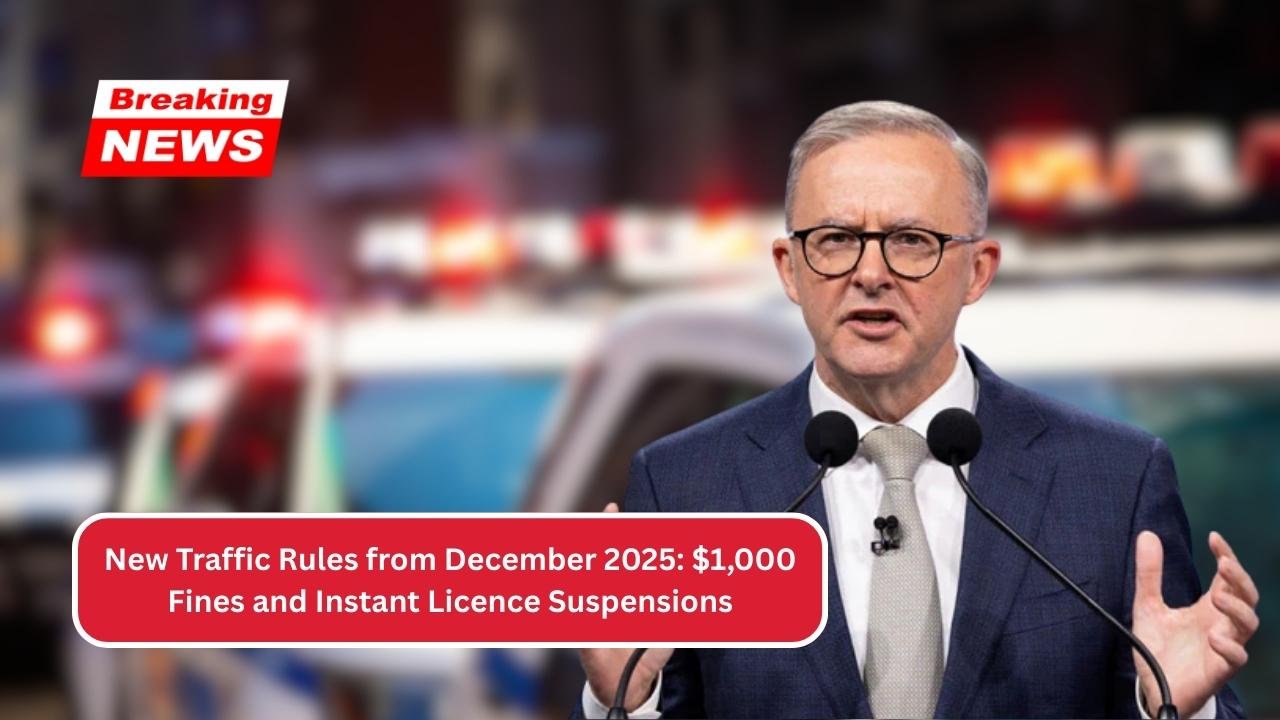
Australia’s road safety landscape is entering a new era from December 2025 as the federal and state governments unite to introduce stronger traffic enforcement laws. The updated national framework brings with it tougher penalties, including fines of up to $1,000 and immediate licence suspensions for severe or repeat offences. Authorities say this reform represents the most ambitious road safety overhaul in years, designed to push the nation toward a future of safer roads and reduced fatalities.
Why the Reforms Are Being Introduced
Throughout 2025, government agencies recorded a worrying rise in crashes, serious injuries, and deaths—especially those linked to speeding, distracted driving, and impaired driving. In some regions, accident numbers are at their highest in a decade. Officials believe stronger deterrents are essential to curb reckless behaviour behind the wheel.
The changes align with the 2026 National Road Safety Plan, a long-term commitment aiming to halve all serious injuries and road deaths by 2030. According to Transport Ministers, a unified national approach will ensure consistent penalties across the country and make enforcement fairer and more effective.
Under the new system, every state and territory now shares the same core penalty structure, giving police officers nationwide a stronger set of tools to immediately penalize dangerous drivers.
Key Changes Rolling Out Nationwide
The new framework introduces five major policy updates that will affect motorists across Australia.
- $1,000 On-the-Spot Fines
Drivers caught engaging in illegal or high-risk behaviour face on-the-spot fines of up to $1,000. These offences include using a mobile phone while driving, running red lights, reckless overtaking, or tailgating other vehicles. The penalty applies equally to car, truck, and motorcycle riders, with commercial vehicle operators facing higher fines to reflect the additional risk their vehicles pose. - Instant Licence Suspensions
Police officers will now have the power to suspend a driver’s licence immediately at the roadside for serious offences like:
- Exceeding the speed limit by 30 km/h or more
- Driving under the influence of alcohol or drugs
- Refusing a roadside breath or drug test
- Dangerous driving endangering others
Suspension periods can range from three months to one year, depending on the type and severity of the offence and the driver’s record. Permanent cancellations may apply to repeat offenders.
- Smarter Enforcement Through AI Technology
From December, Australian states will deploy AI-powered mobile detection cameras that automatically identify illegal phone use, failure to wear seatbelts, and unregistered vehicles. The new systems will integrate data into the National Road Safety Database, helping authorities track offences across state borders for the first time. - Double Demerit Point Zones
To discourage reckless behaviour during peak travel times, double demerit points will apply across all participating states on public holidays and long weekends. These periods traditionally see a sharp increase in accidents, prompting stronger deterrents to protect road users during high-risk travel windows. - Harsher Rules for Repeat Offenders
Motorists who commit multiple serious offences within a 12-month period will face extended disqualification periods, mandatory safe driving programs, and potential increases in fine amounts. Heavy-vehicle and commercial drivers are subject to even higher penalties under these new guidelines.
Offences Now Attracting $1,000 Fines
The list of offences that now carry $1,000 fines has been significantly expanded. These include:
- Using a handheld device while driving
- Speeding by more than 20 km/h
- Running a red light or ignoring a stop sign
- Driving without a seatbelt or allowing passengers to remain unbelted
- Failing to slow down for emergency response vehicles
- Aggressive tailgating or engaging in road rage
This unified penalty structure removes previous ambiguity between states and ensures that all Australian motorists are held to the same safety standards.
What Licence Suspensions Mean for Drivers
Under the revised framework, police can instantly remove a driver’s licence for severe breaches—no warnings and no waiting for court processes. This policy shift reflects a “zero-tolerance” approach to high-risk behaviour intended to prevent repeat offences.
Offences warranting immediate suspension include extreme speeding, high-range drink or drug driving, dangerous manoeuvres causing potential harm, or fleeing from police. Authorities emphasise that this step is vital to protect the public and to eliminate leniency for drivers who consistently endanger others.
State-by-State Adjustments
While the new penalties apply nationally, some states have made specific modifications:
- New South Wales is expanding its roadside camera network and tightening penalties during peak holiday seasons.
- Victoria has introduced digital licence suspension alerts, enabling real-time notification to affected drivers.
- Queensland will impose tougher rules for supervisors of learner drivers caught using mobile phones.
- Western Australia and South Australia are streamlining demerit point systems and introducing online infringement review capabilities.
Drivers are still able to appeal fines or suspensions, but reviews will prioritize road safety impacts over financial or personal hardship claims.
Technology Taking the Lead in Enforcement
The rollout of AI-enabled systems marks one of the most transformative aspects of the new law. These cameras can operate day and night, detecting a range of offences in seconds. Real-time analysis allows each infraction to be uploaded directly to a national database, making it harder for drivers to evade fines by crossing state boundaries.
This integration ensures all demerit points and suspension records are consistent nationwide, streamlining accountability and improving the effectiveness of enforcement.
Preparing for the New Rules
Australian motorists can avoid heavy penalties by taking simple yet crucial precautions:
- Avoid using handheld phones while driving — even at traffic lights.
- Double-check speed limits, especially in new or changing zones.
- Use hands-free technology only when safe and permitted.
- Ensure registration, insurance, and licence details remain current.
- Exercise caution during double demerit periods.
This proactive approach helps drivers not only stay compliant but also contribute to Australia’s broader vision for safer roads.
A Turning Point in Road Safety
Authorities hope the December 2025 reforms will mark a decisive turning point in Australia’s efforts to curb preventable road deaths. By combining tougher penalties with cutting-edge enforcement technology, this national initiative aims to strengthen driver accountability, deter dangerous behaviour, and ultimately save lives.
As this new framework comes into effect, drivers are encouraged to stay informed through state road authority websites and official government updates. The message is clear — safety on Australian roads is not optional, and every driver now plays a direct role in protecting not just themselves but everyone on the road.