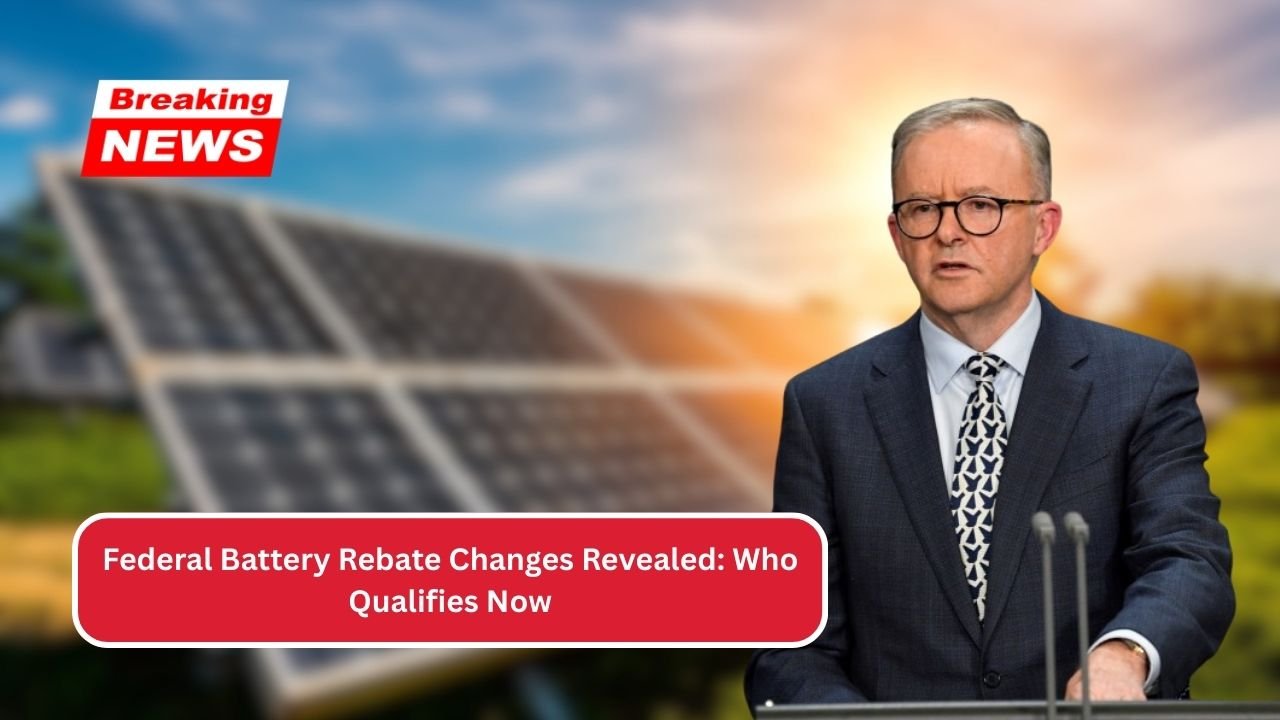
Australia’s federal government has unveiled a major revamp of the Cheaper Home Batteries Program—a cornerstone initiative designed to accelerate the nation’s shift toward clean and secure energy. With an additional $4.9 billion in funding, the program’s total budget now stands at $7.2 billion, ensuring more households will have access to affordable solar battery systems by 2030. These updates reshape not just the rebate structure but the entire home battery landscape for millions of Australians.
Strengthening Australia’s Energy Future
The core purpose of the Cheaper Home Batteries Program remains the same: helping families store renewable energy for use during peak hours, reduce reliance on the grid, and save on energy bills. As solar panel adoption continues rising, battery storage allows homes to capture excess energy produced during the day and use it at night, enhancing both energy efficiency and grid stability.
Government projections show these household batteries could add around 40 gigawatt-hours of energy storage to the national grid. This capacity boost is critical as older coal plants are retired and the rollout of large-scale renewable infrastructure faces delays. The updated program ensures Australia’s renewable transition remains on track and resilient against energy supply disruptions.
Why the Changes Were Necessary
When the initiative launched, policymakers assumed the average household battery would store about 10 to 12 kWh. However, installation data revealed a very different reality—average systems now exceed 28 kWh, more than double initial expectations.
This surge in capacity created several challenges:
- Rebate costs per household grew larger than forecasted.
- The initial budget was being consumed too quickly.
- Without adjustments, the program risked running out of funds by mid‑2026.
By restructuring the system, the government aims to make the scheme equitable and sustainable for both present and future participants.
New Rebate Schedule and Reduction Plan
Under the revised plan, the battery rebate will now decrease every six months instead of annually, beginning in May 2026. The reduction rate will also be higher, incentivizing early adoption. Rebate values are determined per kilowatt-hour (kWh) of battery capacity, with future rates set as follows:
- Remaining months of 2025: ≈ $372 per kWh
- January–April 2026: ≈ $336 per kWh
- May–December 2026: ≈ $272 per kWh
- During 2027: between $228 and $208 per kWh
- In 2028: between $184 and $164 per kWh
- In 2029: between $144 and $124 per kWh
- In 2030: tapering from $104 to $84 per kWh
The gradual reduction ensures a smooth transition rather than an abrupt end, encouraging households to act early to maximize benefits.
New Tiered Rebate Structure for Large Systems
To prevent overuse of funds and promote responsible energy choices, a tiered rebate model will now apply to larger systems:
- Up to 14 kWh: 100% of eligible rebate.
- 14 to 28 kWh: Only 60% rebate on additional capacity.
- 28 to 50 kWh: Only 15% rebate on capacity beyond 28 kWh.
While consumers can install systems up to 100 kWh, rebate eligibility caps at 50 kWh of usable storage. This framework encourages homeowners to choose systems aligned with household consumption rather than maximizing incentives.
Industry Support and Expert Perspectives
Energy experts and solar industry leaders have largely praised these updates, calling them a “measured and sustainable adjustment.” They note that abrupt termination of subsidies could have led to significant business losses and consumer uncertainty.
Gradual phase-downs enable companies to plan efficiently, stabilize production cycles, and invest in workforce expansion. By preventing a sudden cutoff, the government is providing continuity for installers and manufacturers while retaining affordability for consumers.
Benefits for Early Adopters
For Australian households planning their solar battery installation in 2025 or early 2026, the advantages are clear:
- Higher rebate value. Early installations receive the most government support.
- Faster return on investment. Lower initial costs translate to quicker payback periods.
- Ongoing energy savings. Stored solar power helps reduce electricity bills during high-demand hours.
Delaying installation, on the other hand, could result in diminishing financial incentives and higher out-of-pocket expenses as rebate amounts drop in later years.
Long-Term Vision for a Self-Sufficient Energy Network
Beyond individual benefits, this rebate program plays a vital role in Australia’s broader renewable energy strategy. As millions of homes store their own clean electricity, nationwide grid stress decreases and the country’s reliance on traditional fossil fuels continues to fade.
Distributed storage across residential properties also reduces blackouts, improves power reliability during peak usage, and enhances the efficiency of solar generation across the network.
In essence, every battery installed under this scheme strengthens not just a single household but the country’s collective energy resilience.
What Homeowners Should Do Next
Experts recommend that potential participants assess their household energy use, determine an appropriate battery size, and consult certified installers to ensure eligibility under the new rules. Applying during the higher-rebate window—before mid‑2026—could save households thousands of dollars over time.
Financial planning is especially important as battery technology evolves and prices continue to drop, making 2025 and early 2026 a strategic period for investment.
Final Outlook
The updated Federal Battery Rebate 2025 reforms mark a significant evolution in how Australia supports clean energy adoption. By increasing the overall budget while scaling back excessive subsidies for oversized systems, the government has struck a balance between economic responsibility and environmental progress.
For homeowners, the message is simple: act early, choose a system that fits actual needs, and take advantage of the higher rebate period before reductions begin. In doing so, families can cut costs, secure long-term energy independence, and contribute to Australia’s sustainable energy transformation.