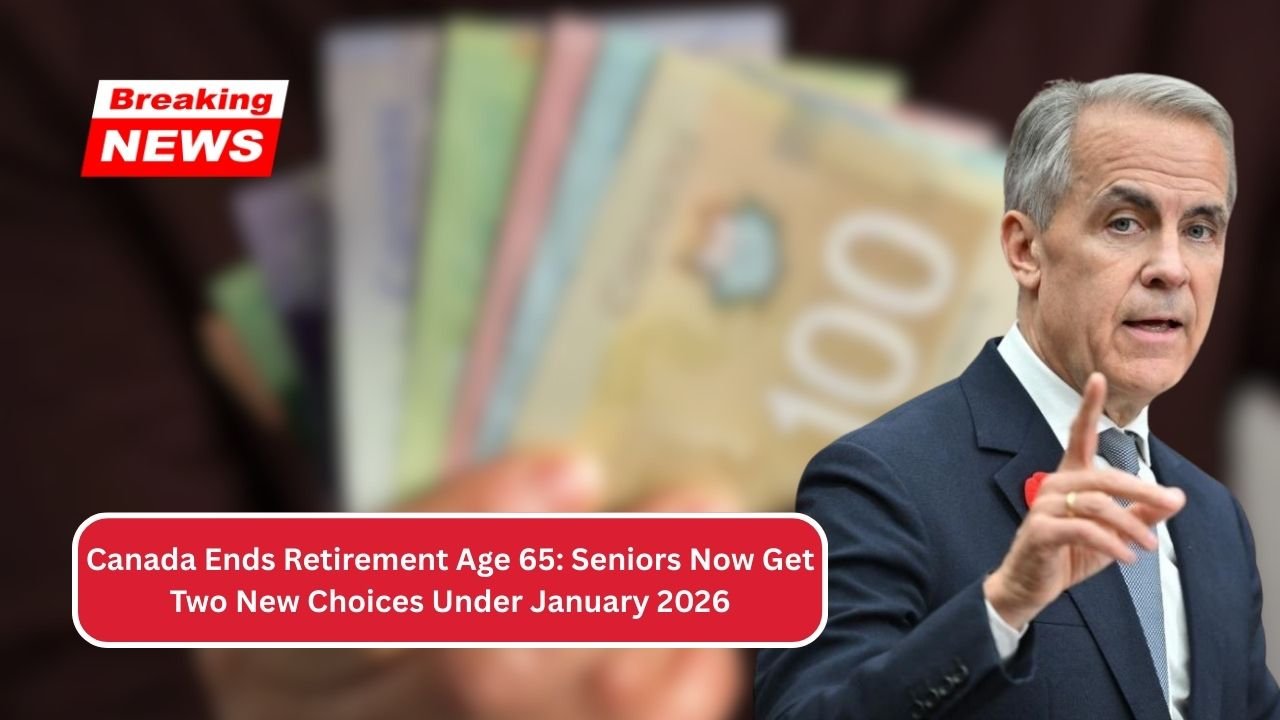
In a landmark policy shift, the Government of Canada has confirmed that starting January 2026, the country will end the fixed retirement age of 65, giving older Canadians two new flexible options for accessing their federal retirement benefits. The reform is part of a national retirement modernization plan designed to reflect longer life expectancy, workforce changes, and the growing diversity of retirement lifestyles.
This development marks one of the most significant updates to Canada’s pension system in decades, affecting how and when millions of Canadians choose to transition from work to retirement.
Why Canada Is Ending the Fixed Retirement Age
For decades, 65 has symbolized the official age of retirement in Canada — the point when most citizens claim Old Age Security (OAS) and Canada Pension Plan (CPP) benefits. However, with Canadians living and working longer than ever, policymakers have acknowledged that a “one‑size‑fits‑all” retirement model no longer aligns with modern economic or demographic realities.
The federal government’s 2026 reforms aim to:
- Give seniors more freedom to decide when they leave the workforce.
- Encourage flexible financial planning based on personal health, career goals, and savings.
- Support the growing share of Canadians who wish to continue part‑time work past 65.
Minister of Employment and Social Development Canada (ESDC) described the reform as “a generational adjustment” that recognizes how work, longevity, and aging have evolved since the original pension laws were written.
What Changes in 2026
Beginning January 2026, seniors approaching retirement will no longer face a mandatory or expected retirement age of 65. Instead, they will be able to choose between two new pathways under the redesigned retirement framework:
- Early Access Option (Starting at Age 60)
Seniors will be allowed to begin accessing partial OAS and CPP benefits as early as 60, similar to partial retirement provisions. While early recipients will receive reduced monthly payments, they’ll have the flexibility to leave work sooner or scale down hours without losing long‑term pension eligibility.This option targets Canadians in physically demanding professions or those facing health or caregiving challenges who may need to retire before 65. - Enhanced Deferred Retirement Option (Up to Age 75)
Those who choose to defer OAS and CPP up to the new maximum age of 75 will earn significantly increased pension payments. Under current projections, benefits could rise by as much as 36–40% compared with the standard age‑65 amount.This path rewards Canadians who continue working longer, allowing their benefits to accumulate higher rates through sustained contributions.
These flexible age options mean retirees can now tailor their retirement timeline to fit individual lives, bridging the gap between full‑time work and complete retirement more smoothly.
How This Affects OAS and CPP
Both Old Age Security and the Canada Pension Plan will align with the new framework in 2026. Here’s what to expect:
- OAS Adjustments: The eligibility age for standard OAS remains 65 by default but can now be voluntarily claimed from 60 to 75 with scaled benefits. No penalties will apply for choosing later claims; instead, delayed claims will yield enhanced returns.
- CPP Adaptations: CPP already offers limited flexibility (60–70). The reform extends this range, setting the new upper limit at 75 and introducing higher earning credits for contributions past 70.
These adjustments ensure that retirement income flexibility mirrors individual needs, encouraging seniors to manage their own financial timelines.
Why This Reform Matters
Demographic and economic shifts drove the need for modernization. By 2030, more than one in four Canadians will be aged 65 or older, with many still active in the workforce. Extending opportunities for delayed retirement helps maintain labour participation, supports the national economy, and eases pressure on pension funds over the long term.
Equally important, offering an early‑access route helps those in lower‑income or physically demanding jobs retire with dignity rather than financial hardship. The dual‑option system balances fairness and flexibility across income groups.
Impact on Employers and the Workforce
Employers will also need to adapt. The 2026 change is expected to alter retirement planning, human resources strategies, and workforce retention policies. Many businesses have already reported that older employees prefer part‑time roles rather than full retirement at 65, creating demand for “phased retirement” programs.
To assist employers, Ottawa will roll out complementary guidelines in early 2026 to help organizations restructure benefits, training programs, and staffing models for multi‑generation workplaces.
Broader Economic and Social Benefits
Economists see this reform as a practical evolution of Canada’s social contract. Allowing voluntary retirement decisions means fewer arbitrary constraints and better alignment of retirement timing with real‑world conditions such as rising longevity (now averaging 83 years), shifting job markets, and variable personal savings.
For the federal government, a more flexible retirement system could:
- Promote longer workforce participation, supporting tax revenues.
- Reduce pension strain by minimizing premature full benefit claims.
- Encourage seniors to stay engaged socially and economically.
Ultimately, this change reflects a broader global trend toward dynamic retirement models already seen in nations like New Zealand, Sweden, and the UK.
Key Points Seniors Should Know
- Mandatory retirement at 65 officially ends in January 2026.
- Canadians can start partial benefits at 60 or delay up to 75 for higher payouts.
- The CRA and Service Canada will update eligibility calculators in December 2025.
- No one will lose benefits — choices remain voluntary and reversible before initial payments begin.
- Financial advisers and Service Canada offices will provide personalized guidance tools starting mid‑2025.
Preparing for the Transition
Seniors approaching age 60–65 are encouraged to:
- Review their pension statement through My Service Canada Account (MSCA).
- Consult certified financial planners about the long‑term tax and income implications of early or delayed claims.
- Monitor official notices and CRA newsletters for final implementation details.
Final Outlook
By ending the one‑age retirement rule, Canada’s January 2026 pension reform introduces a new era of financial flexibility for seniors. Whether retiring early or working longer, Canadians will have greater control over their retirement path, ensuring decisions reflect personal choice rather than fixed policy.
This modernization underscores the government’s commitment to adapting Canada’s social safety net to 21st‑century realities — empowering seniors today while keeping the pension system sustainable for generations to come.